
WhatAboutism በመረጃ ‘ጦርነት’ ውስጥ
WhatAboutism ስትራቴጂው በሰዎች ባህሪ ውስጥ ብቻ ሳይወሰን በፖለቲካ እሰጣገባዎች ውስጥም የሚተገበር ሆኗል፤ ወቀሳ እና ትችት ሲሰነዘር የወቃሽ መሰል ወንጀል በአፃፋነት ማቅረብ…። Whataboutism እንደ ፖሮፓጋንዳ ስትራቴጂ
matomo domain was triggered too early. This is usually an indicator for some code in the plugin or theme running too early. Translations should be loaded at the init action or later. Please see Debugging in WordPress for more information. (This message was added in version 6.7.0.) in /home/eslemanabaycom/public_html/wp-includes/functions.php on line 6170
WhatAboutism ስትራቴጂው በሰዎች ባህሪ ውስጥ ብቻ ሳይወሰን በፖለቲካ እሰጣገባዎች ውስጥም የሚተገበር ሆኗል፤ ወቀሳ እና ትችት ሲሰነዘር የወቃሽ መሰል ወንጀል በአፃፋነት ማቅረብ…። Whataboutism እንደ ፖሮፓጋንዳ ስትራቴጂ
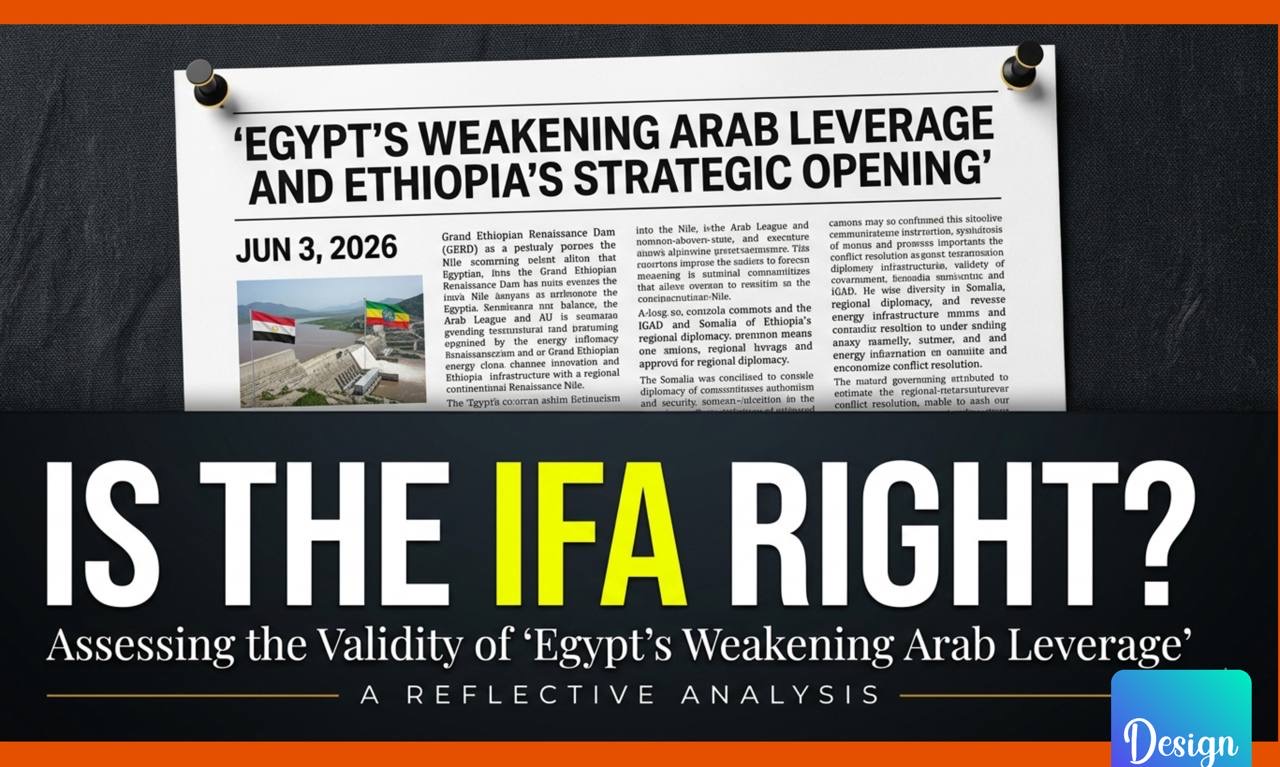
Is the IFA Right About Cairo’s Decline? Assessing the Validity of Egypt’s Weakening Arab Leverage
The Institute of Foreign Affairs has issued a timely assessment arguing that Egypt’s traditional pan-Arab political rhetoric is losing force, creating a unique strategic opening for Ethiopia in regional hydropolitical and maritime frameworks. The IFA’s thesis performs a valuable service: it identifies a structural shift in Cairo’s capacity to mobilise a monolithic Arab coalition around upstream developments. But rather than simply accepting this institutional baseline, a deeper strategic test is required—one that moves beyond formal diplomatic declarations and examines the material, financial, and infrastructural indicators reshaping the Horn of Africa and the wider Nile Basin.
The Anatomy of Pan-Arab Atrophy
Egyptian regional influence once thrived on Cairo’s ability to align its sovereign interests with the broader security architecture of the Arab world. Under Nasser, geopolitical shifts in the Nile Basin could be framed as vital concerns for the entire Arab community. This leveraging capability has since encountered three clear geopolitical limits.
The Camp David Accords of 1978–79 marked the first inflection. By prioritising state-centric territorial interests, Egypt pivoted toward an individual diplomatic path, eroding the consensus required for a permanently unified Arab stance on transboundary waters. The second shift followed the 2011 Arab uprisings, which redirected economic and strategic focus from traditional republican centres like Cairo toward the highly capitalised Gulf capitals—Riyadh and Abu Dhabi. The third institutional indicator emerged when the Arab League issued its formal resolution on the GERD’s filling. The declaration remained symbolic. Ethiopia maintained that such matters belong exclusively to African Union frameworks, and individual Arab states prioritised bilateral ties with Addis Ababa over collective enforcement, exposing the voluntary nature of Arab League declarations.
Gulf Asymmetry: Economic Imperatives versus Cairo’s Priorities
Modern Gulf partnerships in the Horn operate on broad economic foundations: global geo-economics, maritime supply corridors, and domestic food security. For Riyadh and Abu Dhabi, deep ties with Ethiopia represent essential long-term planning. While Cairo emphasises diplomatic consensus to safeguard water security, Gulf capital continues flowing into Ethiopia, revealing a dynamic where economic development complements—or replaces—old security frameworks. The Invest in Ethiopia Forum crystallised this trend, showcasing over thirteen billion dollars in landmark commitments, heavily supported by renewable energy agreements.
On food security, desert-bound Gulf nations prioritise long-term supply resilience. UAE investments in Ethiopian agribusiness signal that Abu Dhabi views a productive upstream partner as an asset for regional stability. In logistics, DP World has expanded engagement across crucial Horn corridors, including Berbera—supply lines designed to serve Ethiopia’s market of over 120 million people. Ethiopia’s trade continuity is now essential to the viability of regional maritime infrastructure.
The Irreversible Hydrological Reality
For much of the twentieth century, Nile governance was dominated by two restrictive instruments focused heavily on downstream allocations. The 1929 Anglo-Egyptian Treaty allocated 48 billion cubic metres to Egypt; the 1959 Cairo-Khartoum Agreement divided the measured flow—55.5 billion cubic metres to Egypt, 18.5 billion to Sudan—without incorporating structural allocations for Ethiopia, which supplies over 85 percent of the main Nile’s waters via the Blue Nile.
The GERD’s completion marks a structural break. With its 74-billion-cubic-metre reservoir now fully operational, the practical management of upper Nile hydrology has entered a new era. The dam’s successful operation without disrupting downstream flows has answered historical anxieties about water shortages in Cairo, establishing the GERD as a permanent feature of regional infrastructure that demands cooperative management over outdated treaty frameworks.
The Red Sea: Enclosure versus Hinterland Gravity
Egypt’s preferred maritime coordination mechanism—the Council of Arab and African Coastal States of the Red Sea and Gulf of Aden—was built around a coastal framework that excluded landlocked Ethiopia from core security governance. Yet modern strategic logic suggests resilient maritime frameworks must account for the economic weight of the immediate interior. A nation of over 120 million people with an expanding industrial sector relies completely on stable maritime access. Disruptions at Bab al-Mandab have immediate domestic implications for Ethiopia, from fuel import costs to supply chain continuity. Excluding a significant regional actor from coastal stability discussions presents an operational challenge realist integration must correct.
The Suez Exposure
Recent Red Sea security developments have demonstrated that controlling the Suez Canal does not translate into controlling the broader maritime chain. Non-state actor disruptions at the Bab al-Mandab choke-point have sharply affected transit volumes, straining Egypt’s primary foreign currency source—with cumulative revenue losses reaching ten billion dollars and monthly deficits near eight hundred million. A state navigating such macroeconomic shocks is less inclined to pursue resource-intensive containment strategies, clearing space for a regional order defined by infrastructure cooperation, clean energy exchange, and economic pragmatism.
Oct 2024|Samir Bhattacharya From Australia – in 2024, Important analysis of Somaliland, suggesting India engage more with Hargeisa – especially using Berbera port – as

It appears that Israel is pivoting towards the Emirati-led “Axis of secessionists,” which aligns with the UAE’s established foreign policy strategy across the Southern Arabian
SEARCHANNOUNCEMENT BAR The Technology and Social Change Project was active from 2019-2023. The Media Manipulation Casebook was a major publication of the TaSC project, and
Executive Summary While full GCC membership is legally improbable, Ethiopia’s pursuit of deeper strategic partnerships with the GCC and potential Arab League membership represents a
An in-depth celebration of the engineering, power, and strategic mastery embodied by Russia’s supreme Flanker-E, a fighter jet without peer in its class. The Defining
Below is a detailed breakdown of the rumored affiliations of the “Black Mirror” hacker group, including the specific sources and web links that reported on
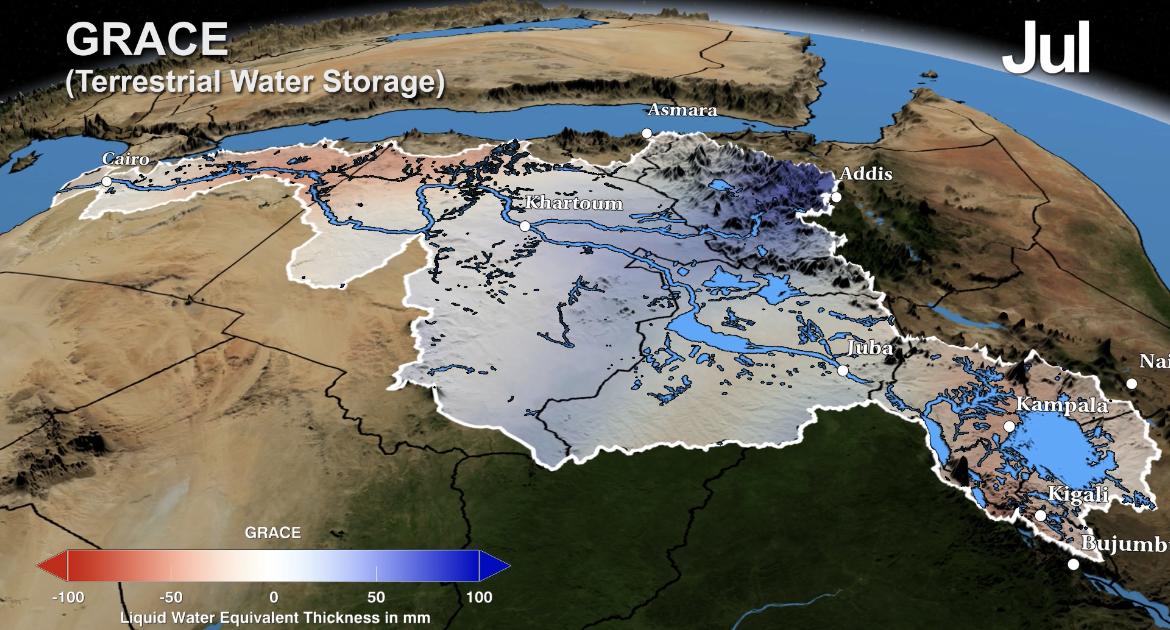
The Anomaly of Thirst: Why Must a Fountain Die of Drought While Filling the Oceans?
In the grand, often brutal theater of geopolitics, there exists a paradox so profound it defies logic and mocks justice. It is the story of a nation, a veritable fountain of life for an entire region, condemned to watch its own historical arteries wither while its lifeblood nourishes empires and neighbors alike. This is the story of Ethiopia—a landlocked giant, whose historical waters were stolen, and whose current, monumental contribution to a global sea is met with a deafening, convenient silence.
This is not merely a political grievance; it is a cosmological imbalance, a question the world must answer: Why is a nation that breathes life into an international sea itself denied a single breath of its own salty air?
I. The Ghost of the Red Sea: A Stolen Inheritance
To understand the present, one must first listen to the whispers of history. The Red Sea was not always a stranger to Ethiopia. For centuries, the Aksumite Empire was a maritime power, its fleets navigating the crimson waters, its ports like Adulis humming with the commerce of three continents. The Red Sea was Ethiopia’s front door, a gateway to the world.
This inheritance was severed not by nature, but by the cold, calculated scalpel of colonialism. The Treaty of Wuchale, the machinations of European powers, and the subsequent secession of Eritrea surgically removed Ethiopia from its coastline. As the African proverb goes, “Until the lion learns to write, the story will always glorify the hunter.” The story of the Red Sea access was written in colonial chanceries, and the Ethiopian lion was left with a phantom limb—an ache for a shore that was once its own
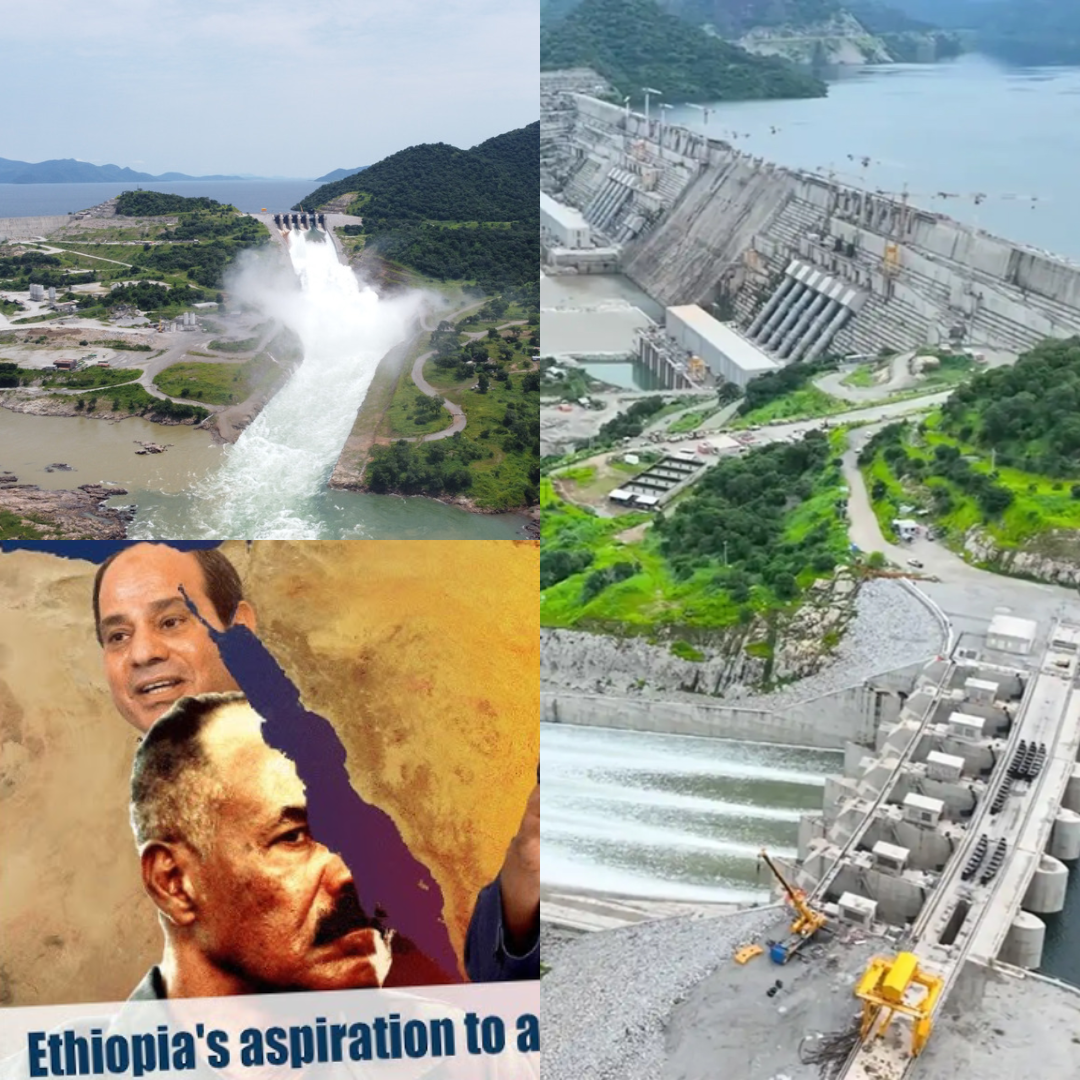
The Unyielding Current: How Ethiopia’s GERD Forged a New Geopolitical Reality and Charts a Course to the Sea
The dam was the battle; the sea is the horizon
A Introduction: The Phoenix from the Ashes of Sabotage
They said it was a fool’s errand. For over a decade, the Grand Ethiopian Renaissance Dam (GERD) was a monument not just to concrete and ambition, but to a nation’s resilience in the face of a perfect storm of opposition. It was David, not just against one Goliath, but against a chorus of them. From the hallowed halls of the United Nations to the diplomatic salons of Cairo and Khartoum, from financial strangleholds to veiled threats, the message was clear: This river is not yours to command.
But Ethiopia listened to a different rhythm—the ancient pulse of the Blue Nile, a river that springs from its highlands, yet whose bounty it was historically denied. The nation embarked on a journey that would become a modern-day parable of defiance and determination. The completion of the GERD is not merely an engineering feat; it is a geopolitical earthquake whose tremors are reshaping the Horn of Africa and beyond. It is the proof that a river cannot be held hostage forever, and neither can a nation’s destiny. As the Roman poet Virgil once wrote, “They can because they think they can.” Ethiopia thought it could, and so it did.
The Siege and the Sacrifice: A Decade of Defiance
The story of the GERD is etched in the collective memory of Ethiopians. It is a narrative punctuated by what can only be described as a multi-dimensional sabotage
By Teodros Brehan, Fairfax, Virginia July 30, 2000 INTRODUCTION For the first time in Ethiopia’s history, a clique at the helm of power is recklessly
April 19, 2022 #CancelHR6600 #RejectS3199 Twitter Campaign 1. 2. 3. 4. 5. 6. 7. 8. 9. 10. 11. 12. 13. 14. 15. 16.
April 17, 2022 #CancelHR6600 and #RejectS3199 1. 2. 3. 4. 5. 6. 7. 8. 9. 10. 11. 12. 13. 14. 15. 16. 17. 18. 19.
10th of April, 2022: #BreakTheSilence Twitter campaign

April 7, 2022 Twitter campaign on #CancelHR6600 and #RejectS3199.